





• About
  • Advertise
  • Privacy & Policy
  • Contact
Thebizhub
2024 Insurance Industry Report
  • Home
  • Economy
    • All
    • 1-2
    • Breaking
    • Business
    • Economy
    • Latest
    • Markets
    • New Post
    • Nigeria
    • Politics
    • Regulations
    • Sports
    • Uncategorized
    Banking Sector Strengthens as Capital Adequacy Ratio Hits 15.2%, Liquidity 49.06%

    Amid 27.50% MPR, Economic Challenges, Prime Lending Rate Rise to 18.19%

    FG fines Multichoice N766m over privacy breaches

    FG fines Multichoice N766m over privacy breaches

    Despite Economic Downturn, Nigeria’s Non-pension AuM Up 71% to N10.1trn

    Despite Economic Downturn, Nigeria’s Non-pension AuM Up 71% to N10.1trn

    Food inflation: NSA, 36 states launch joint action

    Food inflation: NSA, 36 states launch joint action

    Petrol imports drop 54% as Dangote boost supply

    Petrol imports drop 54% as Dangote boost supply

    World Bank retains Nigeria’s growth at 3.6%

    World Bank retains Nigeria’s growth at 3.6%

    Petrol: 6 depots slash prices as competition heightens in downstream sector

    Petrol: 6 depots slash prices as competition heightens in downstream sector

    Market capitalisation hits N70.89tr as 36 stocks close in green

    Market capitalisation hits N70.89tr as 36 stocks close in green

    Sixteen years after meltdown, NGX market cap surges by 347.5%

    Sixteen years after meltdown, NGX market cap surges by 347.5%

    Trending Tags

    • Sports
      • All
      • 1-2
      • Breaking
      • Business
      • Economy
      • Latest
      • Markets
      • New Post
      • Nigeria
      • Politics
      • Regulations
      • Sports
      • Uncategorized
      Banking Sector Strengthens as Capital Adequacy Ratio Hits 15.2%, Liquidity 49.06%

      Amid 27.50% MPR, Economic Challenges, Prime Lending Rate Rise to 18.19%

      FG fines Multichoice N766m over privacy breaches

      FG fines Multichoice N766m over privacy breaches

      Despite Economic Downturn, Nigeria’s Non-pension AuM Up 71% to N10.1trn

      Despite Economic Downturn, Nigeria’s Non-pension AuM Up 71% to N10.1trn

      Food inflation: NSA, 36 states launch joint action

      Food inflation: NSA, 36 states launch joint action

      Petrol imports drop 54% as Dangote boost supply

      Petrol imports drop 54% as Dangote boost supply

      World Bank retains Nigeria’s growth at 3.6%

      World Bank retains Nigeria’s growth at 3.6%

      Petrol: 6 depots slash prices as competition heightens in downstream sector

      Petrol: 6 depots slash prices as competition heightens in downstream sector

      Market capitalisation hits N70.89tr as 36 stocks close in green

      Market capitalisation hits N70.89tr as 36 stocks close in green

      Sixteen years after meltdown, NGX market cap surges by 347.5%

      Sixteen years after meltdown, NGX market cap surges by 347.5%

      Trending Tags

      • Markets
        • All
        • 1-2
        • Breaking
        • Business
        • Economy
        • Latest
        • Markets
        • New Post
        • Nigeria
        • Politics
        • Regulations
        • Sports
        • Uncategorized
        Banking Sector Strengthens as Capital Adequacy Ratio Hits 15.2%, Liquidity 49.06%

        Amid 27.50% MPR, Economic Challenges, Prime Lending Rate Rise to 18.19%

        FG fines Multichoice N766m over privacy breaches

        FG fines Multichoice N766m over privacy breaches

        Despite Economic Downturn, Nigeria’s Non-pension AuM Up 71% to N10.1trn

        Despite Economic Downturn, Nigeria’s Non-pension AuM Up 71% to N10.1trn

        Food inflation: NSA, 36 states launch joint action

        Food inflation: NSA, 36 states launch joint action

        Petrol imports drop 54% as Dangote boost supply

        Petrol imports drop 54% as Dangote boost supply

        World Bank retains Nigeria’s growth at 3.6%

        World Bank retains Nigeria’s growth at 3.6%

        Petrol: 6 depots slash prices as competition heightens in downstream sector

        Petrol: 6 depots slash prices as competition heightens in downstream sector

        Market capitalisation hits N70.89tr as 36 stocks close in green

        Market capitalisation hits N70.89tr as 36 stocks close in green

        Sixteen years after meltdown, NGX market cap surges by 347.5%

        Sixteen years after meltdown, NGX market cap surges by 347.5%

        Trending Tags

        • Regulations
          • All
          • 1-2
          • Breaking
          • Business
          • Economy
          • Latest
          • Markets
          • New Post
          • Nigeria
          • Politics
          • Regulations
          • Sports
          • Uncategorized
          Banking Sector Strengthens as Capital Adequacy Ratio Hits 15.2%, Liquidity 49.06%

          Amid 27.50% MPR, Economic Challenges, Prime Lending Rate Rise to 18.19%

          FG fines Multichoice N766m over privacy breaches

          FG fines Multichoice N766m over privacy breaches

          Despite Economic Downturn, Nigeria’s Non-pension AuM Up 71% to N10.1trn

          Despite Economic Downturn, Nigeria’s Non-pension AuM Up 71% to N10.1trn

          Food inflation: NSA, 36 states launch joint action

          Food inflation: NSA, 36 states launch joint action

          Petrol imports drop 54% as Dangote boost supply

          Petrol imports drop 54% as Dangote boost supply

          World Bank retains Nigeria’s growth at 3.6%

          World Bank retains Nigeria’s growth at 3.6%

          Petrol: 6 depots slash prices as competition heightens in downstream sector

          Petrol: 6 depots slash prices as competition heightens in downstream sector

          Market capitalisation hits N70.89tr as 36 stocks close in green

          Market capitalisation hits N70.89tr as 36 stocks close in green

          Sixteen years after meltdown, NGX market cap surges by 347.5%

          Sixteen years after meltdown, NGX market cap surges by 347.5%

          Trending Tags

          No Result
          View All Result
          • Home
          • Economy
            • All
            • 1-2
            • Breaking
            • Business
            • Economy
            • Latest
            • Markets
            • New Post
            • Nigeria
            • Politics
            • Regulations
            • Sports
            • Uncategorized
            Banking Sector Strengthens as Capital Adequacy Ratio Hits 15.2%, Liquidity 49.06%

            Amid 27.50% MPR, Economic Challenges, Prime Lending Rate Rise to 18.19%

            FG fines Multichoice N766m over privacy breaches

            FG fines Multichoice N766m over privacy breaches

            Despite Economic Downturn, Nigeria’s Non-pension AuM Up 71% to N10.1trn

            Despite Economic Downturn, Nigeria’s Non-pension AuM Up 71% to N10.1trn

            Food inflation: NSA, 36 states launch joint action

            Food inflation: NSA, 36 states launch joint action

            Petrol imports drop 54% as Dangote boost supply

            Petrol imports drop 54% as Dangote boost supply

            World Bank retains Nigeria’s growth at 3.6%

            World Bank retains Nigeria’s growth at 3.6%

            Petrol: 6 depots slash prices as competition heightens in downstream sector

            Petrol: 6 depots slash prices as competition heightens in downstream sector

            Market capitalisation hits N70.89tr as 36 stocks close in green

            Market capitalisation hits N70.89tr as 36 stocks close in green

            Sixteen years after meltdown, NGX market cap surges by 347.5%

            Sixteen years after meltdown, NGX market cap surges by 347.5%

            Trending Tags

            • Sports
              • All
              • 1-2
              • Breaking
              • Business
              • Economy
              • Latest
              • Markets
              • New Post
              • Nigeria
              • Politics
              • Regulations
              • Sports
              • Uncategorized
              Banking Sector Strengthens as Capital Adequacy Ratio Hits 15.2%, Liquidity 49.06%

              Amid 27.50% MPR, Economic Challenges, Prime Lending Rate Rise to 18.19%

              FG fines Multichoice N766m over privacy breaches

              FG fines Multichoice N766m over privacy breaches

              Despite Economic Downturn, Nigeria’s Non-pension AuM Up 71% to N10.1trn

              Despite Economic Downturn, Nigeria’s Non-pension AuM Up 71% to N10.1trn

              Food inflation: NSA, 36 states launch joint action

              Food inflation: NSA, 36 states launch joint action

              Petrol imports drop 54% as Dangote boost supply

              Petrol imports drop 54% as Dangote boost supply

              World Bank retains Nigeria’s growth at 3.6%

              World Bank retains Nigeria’s growth at 3.6%

              Petrol: 6 depots slash prices as competition heightens in downstream sector

              Petrol: 6 depots slash prices as competition heightens in downstream sector

              Market capitalisation hits N70.89tr as 36 stocks close in green

              Market capitalisation hits N70.89tr as 36 stocks close in green

              Sixteen years after meltdown, NGX market cap surges by 347.5%

              Sixteen years after meltdown, NGX market cap surges by 347.5%

              Trending Tags

              • Markets
                • All
                • 1-2
                • Breaking
                • Business
                • Economy
                • Latest
                • Markets
                • New Post
                • Nigeria
                • Politics
                • Regulations
                • Sports
                • Uncategorized
                Banking Sector Strengthens as Capital Adequacy Ratio Hits 15.2%, Liquidity 49.06%

                Amid 27.50% MPR, Economic Challenges, Prime Lending Rate Rise to 18.19%

                FG fines Multichoice N766m over privacy breaches

                FG fines Multichoice N766m over privacy breaches

                Despite Economic Downturn, Nigeria’s Non-pension AuM Up 71% to N10.1trn

                Despite Economic Downturn, Nigeria’s Non-pension AuM Up 71% to N10.1trn

                Food inflation: NSA, 36 states launch joint action

                Food inflation: NSA, 36 states launch joint action

                Petrol imports drop 54% as Dangote boost supply

                Petrol imports drop 54% as Dangote boost supply

                World Bank retains Nigeria’s growth at 3.6%

                World Bank retains Nigeria’s growth at 3.6%

                Petrol: 6 depots slash prices as competition heightens in downstream sector

                Petrol: 6 depots slash prices as competition heightens in downstream sector

                Market capitalisation hits N70.89tr as 36 stocks close in green

                Market capitalisation hits N70.89tr as 36 stocks close in green

                Sixteen years after meltdown, NGX market cap surges by 347.5%

                Sixteen years after meltdown, NGX market cap surges by 347.5%

                Trending Tags

                • Regulations
                  • All
                  • 1-2
                  • Breaking
                  • Business
                  • Economy
                  • Latest
                  • Markets
                  • New Post
                  • Nigeria
                  • Politics
                  • Regulations
                  • Sports
                  • Uncategorized
                  Banking Sector Strengthens as Capital Adequacy Ratio Hits 15.2%, Liquidity 49.06%

                  Amid 27.50% MPR, Economic Challenges, Prime Lending Rate Rise to 18.19%

                  FG fines Multichoice N766m over privacy breaches

                  FG fines Multichoice N766m over privacy breaches

                  Despite Economic Downturn, Nigeria’s Non-pension AuM Up 71% to N10.1trn

                  Despite Economic Downturn, Nigeria’s Non-pension AuM Up 71% to N10.1trn

                  Food inflation: NSA, 36 states launch joint action

                  Food inflation: NSA, 36 states launch joint action

                  Petrol imports drop 54% as Dangote boost supply

                  Petrol imports drop 54% as Dangote boost supply

                  World Bank retains Nigeria’s growth at 3.6%

                  World Bank retains Nigeria’s growth at 3.6%

                  Petrol: 6 depots slash prices as competition heightens in downstream sector

                  Petrol: 6 depots slash prices as competition heightens in downstream sector

                  Market capitalisation hits N70.89tr as 36 stocks close in green

                  Market capitalisation hits N70.89tr as 36 stocks close in green

                  Sixteen years after meltdown, NGX market cap surges by 347.5%

                  Sixteen years after meltdown, NGX market cap surges by 347.5%

                  Trending Tags

                  No Result
                  View All Result
                  Thebizhub
                  No Result
                  View All Result
                  Home Economy

                  Subsidising the Naira Blocks Nigeria’s Economic Takeoff

                  Thisdaylive | September 14, 2020
                  Vetiva Predicts Stability for Naira in Near Term
                  0
                  SHARES
                  22
                  VIEWS
                  Share on FacebookShare on TwitterWhatsapp

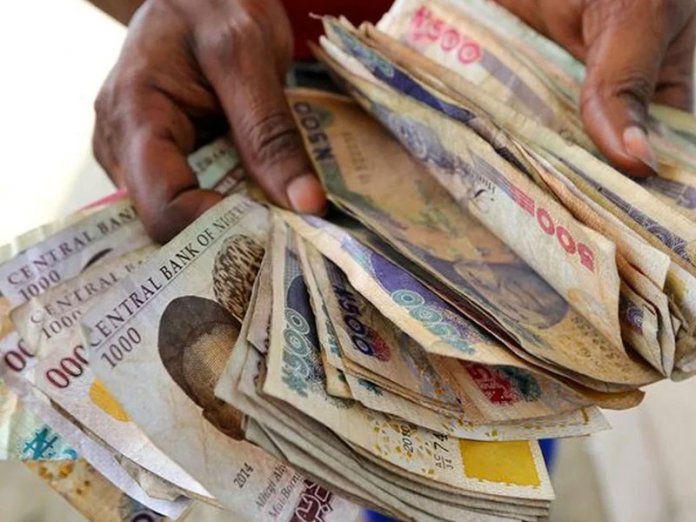
                  The naira should be floated to find its exchange rate value on the market if Nigeria’s economy is to become productive, instead of relying on oil revenues, a dependency that has plunged our country and our citizens deeper and deeper into fiscal bankruptcy and individual poverty.

                  Ending the elusive quest for a “strong” currency when the economic fundamentals do not support it will be painful in the short run (we have already undergone several years of devaluations forced by these fundamentals, so what’s new?) but will be beneficial in the longer term.

                  The notion of an artificially strong currency remains attractive for three fundamental reasons: Firstly, we are fundamentally an import economy, and imports are priced in dollars and other “reserve” currencies in international trade. Secondly, there is a lack of economic knowledge both in policy-making governance circles and in the wider population.


                  Thirdly, based on the two factors earlier cited, politicians want to remain “popular” and lack the political will to do what is required to set the economy on a truly productive path. Some “technocrats”, for self-serving reasons, sing and clap along instead of providing the necessary advice and guidance.

                  In taking this approach, as well as others such as subsidies on consumption instead of on production, structural poverty has been entrenched in Nigeria and the Nigerian economy has remained uncompetitive in a global context, for far too long.


                  To measure the naira only relative to the dollar and other foreign currencies is to miss a fine point – that it matters as well to differentiate what the naira equivalent of one dollar can buy in Nigeria from what one dollar can buy in America-what economists call “purchasing power parity” – what your currency can purchase for you in your national market as a way to measure GDP and GDP per capita. This approach to measuring economies arose because sometimes currencies are manipulated, and so measuring against such currencies may not yield a fully accurate picture.

                  As someone so brilliantly put it on a Whatsapp post I read, “in the US, a dollar may not buy you more than a bottle of water, while N500 will buy you a pack of 12 of the same bottles of water in Nigeria!”


                  Because we are an import economy, we want to maintain an artificially strong naira/dollar exchange rate, to subsidise the import habit of our elite, or our ability to pay school fees of our wards abroad – understandable, given the decline of education in Nigeria, but not the solution to a problem that needs to be fixed.

                  We produce and export nothing that is value-added. Over 90 per cent of our forex comes from oil. When an economy lacks “complexity” (value-added manufacturing as a ratio of GDP) but depends on exports of natural commodities or minerals, the exchange rate value of its currency is determined almost exclusively by the level of its foreign reserves, which accrues mainly from income from such commodity or resource exports. These reserves determine how many months of imports such a country can pay for.


                  So when oil prices are high for a long period, the reserves swell, and the (say) naira value relative to foreign currencies rises. When the oil price crashes, our reserves are depleted. When reserve levels indicate that a country’s ability to pay for up to six imports is threatened, market forces weaken the strength of the currency (naira in this instance).

                  The value of the currency crashes, because that value is not underpinned by diversified exports that earn revenues as is the case with mature economies. If oil were $100 per barrel for a long period, for example, and our reserves rose to $80 billion, the naira value relative to the dollar will go up. But we have little control over the vagaries of the oil price.


                  Commodity dependence therefore exposes a country to currency instability except the country builds up huge reserves (e.g Saudi Arabia and the Gulf countries which long ago invested heavily in oil refining AND have huge sovereign wealth funds (we arrived at the sovereign wealth party about 40 years late!) in addition to exporting crude. It is obvious in such cases that there is backing for that legal tender in terms that are relevant internationally. The naira is not so fortunate because our economy is “naked” and globally uncompetitive.

                  What all this means is that the Central Bank of Nigeria’s efforts to “defend” the naira are like Sisyphus rolling the proverbial huge boulder up the hill, only for it to surely come rolling back down, economically speaking. It weakens the very value of the naira it is defending because the dollar supplies come from the external reserves, but is politically “expedient” because it creates an impression of patriotic nationalism. By the end of the first quarter of 2020, for example, the Bank is reported to have spent approximately $4 billion on naira defence in the forex market by supplying the market with dollars.

                  But it’s all just populism. Foreign investors have exited, and forex is not coming in as investments aren’t at a level that can create confidence.

                  So the only way to reposition our economy is to shift it from an import-oriented one to one that is export-oriented. For as long as CBN continues to subsidise the value of the naira this will not happen, because they are creating incentives for an import orientation.


                  Forex “ban” makes the matter worse. Local productivity often is not enough to meet the gap in demand for the previously imported products. Smuggling booms. Meanwhile, in a frontier economy, “cabals” have allegedly had access to the naira at CBN rates, so they obtain huge amounts of subsidised dollars, and turn around to sell the dollars at the street market rates with huge profits. Arbitrage reigns. The black market booms.

                  But if CBN devalues the naira decisively rather than tentatively, or allows it find its value in the market, this will create an incentive to manufacture locally and export in order to earn forex, because imports become more expensive.


                  But other policies must accompany this approach. The absence of those policies is why series of devaluations have not solved the problems, but only import inflation. This is death by a thousand cuts.

                  The necessary accompanying policy thrust is trade policy. Instead of forex bans, anyone should be able to import (yes, they will need forex to do so) but slap high tariffs (revenues for the government!) on imports deemed luxury items.

                  Policy support should be provided to enable local production of such goods to be cheaper than foreign imports. That way, rich people can buy expensive imported goods, poorer people can buy cheaper “local-made”. More exports, more forex, and eventually the value of the naira stabilises.


                  The “cheap” exchange rate of the naira (from the perspective of foreign trade partners) will lead to greater orders of Nigerian manufactures, which = more forex earnings. Foreign investors seeking profit will also flood the country that is seen as a large and profitable market with dollars because the market is “open” and trade transparent. This will also help stabilise the naira.

                  But this is difficult when Nigeria is being mortgaged to a country like China. If our government treats China as a financial lifeline, can we slap the appropriate tariffs on imports from China which are so cheaply produced that it makes production in Nigeria uncompetitive? This is part of a broader problem of the absence of a worldview that includes a strategy to rise in the world, including economically.


                  Ideally, citizens should be well prepared, communicated to and educated about these kinds of necessary reforms. And we know that vested interests will often seek to short-circuit such reforms to still game the system. It’s like highway robbery on an unsafe road.

                  You may be okay in the early part of the journey, but could (God forbid) run into robbers in the last mile. The role of vested-interest rent-seeking in Nigeria’s economy has been a dominant one for far too long. The phenomenon is not unique to Nigeria, but that’s no excuse.


                  Our concern is about our country and our people and creating an enabling environment for real development. Getting right the balance between the role of the state and that of markets is one of the most important factors in development. I hope that, as President Muhammadu Buhari pursues the Vision 2050, we can get these fundamentals right.

                  Moghalu is a former presidential candidate and a former deputy governor of the Central Bank of Nigeria.

                  Previous Post

                  Index plunges by 0.05% amid dividend declarations

                  Next Post

                  Tariff increase: Discos get 85% collection order

                  Admin

                  Admin

                  Next Post
                  NERC caps estimated billing, issues April 30 deadline for metering

                  Tariff increase: Discos get 85% collection order

                  Opinion Poll

                  2023 Insurance Industry Report2023 Insurance Industry Report2023 Insurance Industry Report
                  FSDHFSDHFSDH
                  • Trending
                  • Comments
                  • Latest
                  At -7.82 YtD, OIl & Gas Index Emerges Worst Performing Indicator on NGX

                  At -7.82 YtD, OIl & Gas Index Emerges Worst Performing Indicator on NGX

                  March 24, 2025
                  H1 2021: Global Insurance Market Records Losses, Claims Worth $42bn

                  17 states shun universal health insurance scheme

                  May 16, 2022
                  News of impending flood sends jitters across Ogun, Lagos communities

                  News of impending flood sends jitters across Ogun, Lagos communities

                  August 22, 2020
                  Lagos raises N100 billion bond to finance infrastructure

                  Lagos raises N100 billion bond to finance infrastructure

                  January 30, 2020
                  Banking Sector Strengthens as Capital Adequacy Ratio Hits 15.2%, Liquidity 49.06%

                  Amid 27.50% MPR, Economic Challenges, Prime Lending Rate Rise to 18.19%

                  August 11, 2025
                  FG fines Multichoice N766m over privacy breaches

                  FG fines Multichoice N766m over privacy breaches

                  July 7, 2025
                  Despite Economic Downturn, Nigeria’s Non-pension AuM Up 71% to N10.1trn

                  Despite Economic Downturn, Nigeria’s Non-pension AuM Up 71% to N10.1trn

                  July 2, 2025
                  Food inflation: NSA, 36 states launch joint action

                  Food inflation: NSA, 36 states launch joint action

                  June 20, 2025

                  Recent News

                  Banking Sector Strengthens as Capital Adequacy Ratio Hits 15.2%, Liquidity 49.06%

                  Amid 27.50% MPR, Economic Challenges, Prime Lending Rate Rise to 18.19%

                  August 11, 2025
                  FG fines Multichoice N766m over privacy breaches

                  FG fines Multichoice N766m over privacy breaches

                  July 7, 2025
                  Despite Economic Downturn, Nigeria’s Non-pension AuM Up 71% to N10.1trn

                  Despite Economic Downturn, Nigeria’s Non-pension AuM Up 71% to N10.1trn

                  July 2, 2025
                  Food inflation: NSA, 36 states launch joint action

                  Food inflation: NSA, 36 states launch joint action

                  June 20, 2025
                  Thebizhub

                  Powered by Agusto & Co.

                  • About
                  • Advertise
                  • Privacy & Policy
                  • Contact

                  ©2019 Thebizhub.ng .All Rights Reserved

                  No Result
                  View All Result
                  • Home
                  • Economy
                  • Sports
                  • Markets
                  • Regulations

                  ©2019 Thebizhub.ng .All Rights Reserved