



Nigeria’s headline inflation rate for September 2024 rose to 32.70 percent after slowing consecutively in July and August.

This was according to the latest Consumer Price Index report from the National Bureau of Statistics.
The World Bank projected that Nigeria would experience a further rise in inflation rates in September 2024, largely driven by a significant hike in the price of petrol.
The latest inflation figure is a marginal increase of 0.55 percent from the August 2024 figure of 32.15 percent, reflecting ongoing price pressures across the country.
Year-on-year, inflation has surged by 5.98 percentage points compared to the 26.72 percent recorded in September 2023.
The report read, “In September 2024, the headline inflation rate was 32.70 percent relative to the August 2024 headline inflation rate of 32.15 percent. Looking at the movement, the September 2024 headline inflation rate increased by 0.55 percent compared to the August 2024 headline inflation rate.
“On a year-on-year basis, the headline inflation rate was 5.98 percent points higher compared to the rate recorded in September 2023 (26.72 percent). This shows that the headline inflation rate (on a year-on-year basis) increased in September 2024 compared to the same month in the preceding year (i.e., September 2023).
“Further, on a month-on-month basis, the headline inflation rate in September 2024 was 2.52 percent, which was 0.30 percent higher than the rate recorded in August 2024 (2.22 percent). This means that in September 2024, the rate of increase in the average price level is higher than the rate of increase in the average price level in August 2024.”
The World Bank’s Africa’s Pulse report released on Monday projected that Nigeria would experience a further rise in inflation rates in September 2024, largely driven by a significant hike in gasoline prices.
The report noted that the government’s decision to implement market-based pricing, which initially tripled gasoline prices in May 2023, led to an additional 40-45 percent rise in fuel costs in September 2024.
This development is expected to exacerbate inflationary pressures, with transportation and production costs rising sharply, leading to higher prices for goods and services across the country.
This rise in inflation follows a trend that began in June 2024, when headline inflation peaked, influenced heavily by increases in fuel prices and the subsequent rise in transportation and production costs.
The higher cost of fuel has had a ripple effect on various sectors, pushing up the prices of goods and services across the country.
The report read, “While the inflationary effects of a weakened naira in the first months of this year and the removal of the gasoline subsidy in the second half of 2023 appeared to be gradually subsiding, a further increase in gasoline prices by 40-45 percent in September may reverse the disinflationary trend. The consolidation of macroeconomic reforms should support higher growth in the country in 2025.”
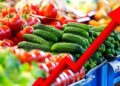
The NBS report also noted that food prices remain a key driver of inflation, with the food inflation rate climbing to 37.77 percent in September 2024, a notable rise of 7.13 percent from the 30.64 percent recorded in the same period last year.
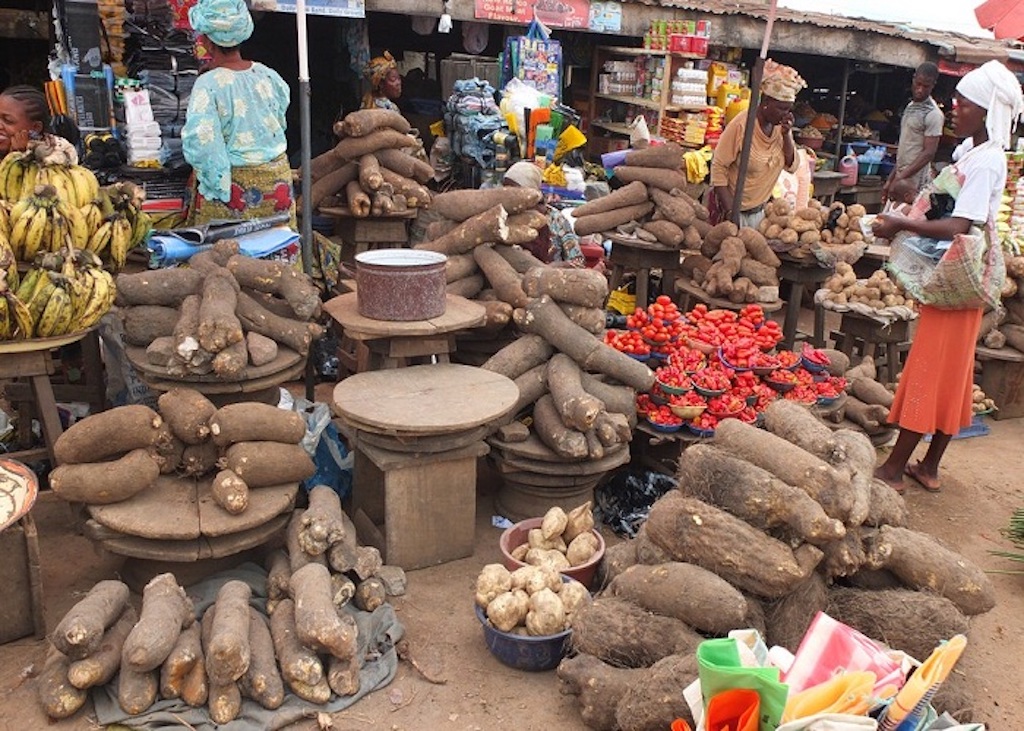
The increase in food inflation is largely attributed to rising prices of staples such as rice, maize, beans, and yams. Month-on-month, the food inflation rate also increased to 2.64 percent in September 2024, up from 2.37 percent in August.
Inflation is more pronounced in urban areas than in rural regions, with urban inflation rising to 35.13 percent in September 2024, up from 28.68 percent in the previous year. In rural areas, the inflation rate reached 30.49 percent, compared to 24.94 percent in September 2023. Month-on-month, urban inflation stood at 2.67 percent, while rural inflation was recorded at 2.39 percent.
Among the states, Bauchi recorded the highest year-on-year inflation rate at 44.83 percent, followed by Sokoto (38.74 percent) and Jigawa (38.39 percent). Conversely, Delta (26.35 percent), Benue (26.90 percent), and Katsina (27.71 percent) experienced the slowest inflation rise. On a month-on-month basis, Sokoto saw the sharpest increase at 4.63 percent, with Taraba (4.07 percent) and Anambra (3.74 percent) also showing significant rises.
Core inflation, which excludes volatile agricultural products and energy prices, rose to 27.43 percent in September 2024, a 5.59 percent increase compared to the 21.84 percent recorded in September 2023. Significant price increases were observed in housing rentals, transport, and medical services.
The rise in inflation occurred after a consecutive drop, which was triggered by a decrease in food prices following the harvest period in Nigeria.
The Monetary Policy Committee of the Central Bank of Nigeria last month voted to increase the monetary policy rate, which measures the benchmark interest rate, to 27.25 percent.
This new rate, a move that stunned the financial markets, was an increase of 50 basis points from 26.75 percent announced by the apex bank in July 2024.
Financial experts had expected that the CBN would either hold or lower interest rates following two consecutive months of declining headline inflation.
According to the CBN, the decision to raise interest rates was premised on recent events in the economy regarding inflation and the stability of the foreign exchange market.
The CBN Governor, Yemi Cardoso, mentioned the threats of food inflation, flooding in many parts of the country, and rising petrol and energy prices as reasons why further monetary policy tightening should be executed.
Some market analysts earlier said that factors such as the depreciation of the naira and the fuel prices would likely see inflationary trends re-emerge.
The Managing Director of Cowry Asset Management Limited, Johnson Chukwu, during the firm’s recent Third Quarter Webinar Series, expressed concerns that there may be a re-emergence of the inflationary trend due to rising fuel prices, which impacts the services of goods and services.