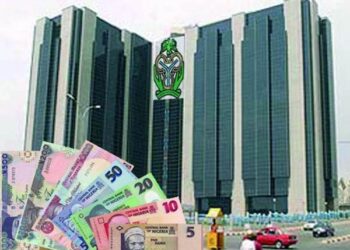








Following the hike in the Monetary Policy Rate (MPR) to 18 percent by the Central Bank of Nigeria (CBN), the Prime lending rate in the banking sector increased to an average of 13.97 percent in March 2023 from an average of 13.62 percent in February.

This is according to the CBN in its money market indicators for the month of March 2023.
Prime lending refers to the interest rate that large commercial banks charge on loans and products held by their customers with the highest credit rating. Typically, the customers with high creditworthiness are large corporations that are borrowing from commercial banks in order to finance their operations with debt.
According to THISDAY investigations, the 13.97 percent prime lending rate is the highest in 25 months.
THISDAY checks further revealed that the hike was driven by the CBN’s effort at tackling the inflation rate that reached 22.04 percent in March 2023.
Prime lending closed 2022 at an average of 13.85 percent from an average of 11.68 percent in 2021. The prime lending rate reached an all-time high of an average of 19.66 percent in November 2009 and a record low of an average of 11.13 percent in March 2021.
However, the maximum lending rate dropped to an average of 28.75 percent in March 2023 from an average of 28.08 percent reported by the CBN in February 2023, while interest on savings deposits closed March 2023 at an average of 4.58 percent, the highest in over 17 years.
The maximum lending rate refers to the rate charged by banks for lending to customers with low credit ratings.
Also, the interest rate on treasury bills (T-Bills) increased to 3.81 percent in March 2023, the highest so far this year.
Financial analysts expressed that the gap between the CBN’s lending rate and the prime lending calls for concern, stressing that the spread between the rates should not be more than 10 percent.
“Businesses need a lot of credit facilities to survive, but in an environment where the lending rate is astronomical, many enterprises, especially small and medium-scale, might find it extremely difficult to survive as their products will remain uncompetitive and the cost of production and the sale prices to consumers will remain high, ”said Vice President of Highcap Securities Limited, Mr. David Adnori.
He added that “A hike in interest rate is often considered a manufacturers’ nightmare as it stifles productivity and expansion. A hike in interest rates slows down productivity, as manufacturers struggle to keep machinery in operation and pay salaries. Those who look forward to borrowing for expansion and production will have to shelve such ideas in the face of the high cost of accessing funds.”
Adnori suggested that development banks must be encouraged to lend at a single digit with stringent tracking, adding that CBN’s policy on tackling the inflation rate not working.
According to him, “Both CBN and FG are not serious in coordinating their policies to bring down inflation. While the CBN is pursuing a contractionary monetary policy to tackle inflation, the FG is pursuing an expansionary fiscal policy, leading to a mismatch in the two policies.
“While CBN is pretending they are undertaking contractionary monetary policy, they are advancing illegal credit to FG through Ways and Means which is the means cause of inflation to the current level.”
Speaking with THISDAY, Director/Chief Executive Officer, of the Centre for the Promotion of Private Enterprise (CPPE), Dr. Muda Yusuf questioned the average 13.97 percent prime lending rate.
He disclosed that the average prime lending in the Nigerian banking sector is at an average of 16-18 percent, stating that creditworthy firms are lamenting over the rate.
“The prime lending rate in the banking sector is more than 13 percent reported by CBN in its money market indicators. Some firms accessing credit close to 18 percent prime lending rate. I know of big companies that get credit from banks at a much higher rate,” he expressed.
The Monetary Policy Committee (MPC) of the CBN in March raised the MPR, which measures interest rate, from 17.5 percent to 18 percent.
The CBN Governor, Mr. Godwin Emefiele had admitted that the hike in MPR would increase the cost of borrowing, especially in non-priority sectors of the economy.
Emefiele, however, added that lending to key priority sectors, which had been identified to boost growth and generate employment, would remain at a single-digit interest rate of nine percent.
He pointed out that the decision to raise interest rates was the last resort and a difficult one for the MPC, which had been crafting policies to stimulate economic growth as well as achieve financial stability.
He said the CBN had adopted a contractionary monetary policy stance in view of the aggressive rise in inflation in recent times, which had led to high food and commodity prices in the country.
Emefiele noted that CBN’s action was aimed at curbing inflation, on the one hand, and supporting the growth of the economy, on the other. He said the MPC was in a dilemma in arriving at a decision to raise the lending rate. As a result, the apex bank governor explained, a drastic measure such as raising the benchmark lending rate was required to reduce monetary expansion in order to tame inflation.