




• About
  • Advertise
  • Privacy & Policy
  • Contact
Thebizhub
2024 Insurance Industry Report
  • Home
  • Economy
    • All
    • 1-2
    • Breaking
    • Business
    • Economy
    • Latest
    • Markets
    • New Post
    • Nigeria
    • Politics
    • Regulations
    • Sports
    • Uncategorized
    Banking Sector Strengthens as Capital Adequacy Ratio Hits 15.2%, Liquidity 49.06%

    Amid 27.50% MPR, Economic Challenges, Prime Lending Rate Rise to 18.19%

    FG fines Multichoice N766m over privacy breaches

    FG fines Multichoice N766m over privacy breaches

    Despite Economic Downturn, Nigeria’s Non-pension AuM Up 71% to N10.1trn

    Despite Economic Downturn, Nigeria’s Non-pension AuM Up 71% to N10.1trn

    Food inflation: NSA, 36 states launch joint action

    Food inflation: NSA, 36 states launch joint action

    Petrol imports drop 54% as Dangote boost supply

    Petrol imports drop 54% as Dangote boost supply

    World Bank retains Nigeria’s growth at 3.6%

    World Bank retains Nigeria’s growth at 3.6%

    Petrol: 6 depots slash prices as competition heightens in downstream sector

    Petrol: 6 depots slash prices as competition heightens in downstream sector

    Market capitalisation hits N70.89tr as 36 stocks close in green

    Market capitalisation hits N70.89tr as 36 stocks close in green

    Sixteen years after meltdown, NGX market cap surges by 347.5%

    Sixteen years after meltdown, NGX market cap surges by 347.5%

    Trending Tags

    • Sports
      • All
      • 1-2
      • Breaking
      • Business
      • Economy
      • Latest
      • Markets
      • New Post
      • Nigeria
      • Politics
      • Regulations
      • Sports
      • Uncategorized
      Banking Sector Strengthens as Capital Adequacy Ratio Hits 15.2%, Liquidity 49.06%

      Amid 27.50% MPR, Economic Challenges, Prime Lending Rate Rise to 18.19%

      FG fines Multichoice N766m over privacy breaches

      FG fines Multichoice N766m over privacy breaches

      Despite Economic Downturn, Nigeria’s Non-pension AuM Up 71% to N10.1trn

      Despite Economic Downturn, Nigeria’s Non-pension AuM Up 71% to N10.1trn

      Food inflation: NSA, 36 states launch joint action

      Food inflation: NSA, 36 states launch joint action

      Petrol imports drop 54% as Dangote boost supply

      Petrol imports drop 54% as Dangote boost supply

      World Bank retains Nigeria’s growth at 3.6%

      World Bank retains Nigeria’s growth at 3.6%

      Petrol: 6 depots slash prices as competition heightens in downstream sector

      Petrol: 6 depots slash prices as competition heightens in downstream sector

      Market capitalisation hits N70.89tr as 36 stocks close in green

      Market capitalisation hits N70.89tr as 36 stocks close in green

      Sixteen years after meltdown, NGX market cap surges by 347.5%

      Sixteen years after meltdown, NGX market cap surges by 347.5%

      Trending Tags

      • Markets
        • All
        • 1-2
        • Breaking
        • Business
        • Economy
        • Latest
        • Markets
        • New Post
        • Nigeria
        • Politics
        • Regulations
        • Sports
        • Uncategorized
        Banking Sector Strengthens as Capital Adequacy Ratio Hits 15.2%, Liquidity 49.06%

        Amid 27.50% MPR, Economic Challenges, Prime Lending Rate Rise to 18.19%

        FG fines Multichoice N766m over privacy breaches

        FG fines Multichoice N766m over privacy breaches

        Despite Economic Downturn, Nigeria’s Non-pension AuM Up 71% to N10.1trn

        Despite Economic Downturn, Nigeria’s Non-pension AuM Up 71% to N10.1trn

        Food inflation: NSA, 36 states launch joint action

        Food inflation: NSA, 36 states launch joint action

        Petrol imports drop 54% as Dangote boost supply

        Petrol imports drop 54% as Dangote boost supply

        World Bank retains Nigeria’s growth at 3.6%

        World Bank retains Nigeria’s growth at 3.6%

        Petrol: 6 depots slash prices as competition heightens in downstream sector

        Petrol: 6 depots slash prices as competition heightens in downstream sector

        Market capitalisation hits N70.89tr as 36 stocks close in green

        Market capitalisation hits N70.89tr as 36 stocks close in green

        Sixteen years after meltdown, NGX market cap surges by 347.5%

        Sixteen years after meltdown, NGX market cap surges by 347.5%

        Trending Tags

        • Regulations
          • All
          • 1-2
          • Breaking
          • Business
          • Economy
          • Latest
          • Markets
          • New Post
          • Nigeria
          • Politics
          • Regulations
          • Sports
          • Uncategorized
          Banking Sector Strengthens as Capital Adequacy Ratio Hits 15.2%, Liquidity 49.06%

          Amid 27.50% MPR, Economic Challenges, Prime Lending Rate Rise to 18.19%

          FG fines Multichoice N766m over privacy breaches

          FG fines Multichoice N766m over privacy breaches

          Despite Economic Downturn, Nigeria’s Non-pension AuM Up 71% to N10.1trn

          Despite Economic Downturn, Nigeria’s Non-pension AuM Up 71% to N10.1trn

          Food inflation: NSA, 36 states launch joint action

          Food inflation: NSA, 36 states launch joint action

          Petrol imports drop 54% as Dangote boost supply

          Petrol imports drop 54% as Dangote boost supply

          World Bank retains Nigeria’s growth at 3.6%

          World Bank retains Nigeria’s growth at 3.6%

          Petrol: 6 depots slash prices as competition heightens in downstream sector

          Petrol: 6 depots slash prices as competition heightens in downstream sector

          Market capitalisation hits N70.89tr as 36 stocks close in green

          Market capitalisation hits N70.89tr as 36 stocks close in green

          Sixteen years after meltdown, NGX market cap surges by 347.5%

          Sixteen years after meltdown, NGX market cap surges by 347.5%

          Trending Tags

          No Result
          View All Result
          • Home
          • Economy
            • All
            • 1-2
            • Breaking
            • Business
            • Economy
            • Latest
            • Markets
            • New Post
            • Nigeria
            • Politics
            • Regulations
            • Sports
            • Uncategorized
            Banking Sector Strengthens as Capital Adequacy Ratio Hits 15.2%, Liquidity 49.06%

            Amid 27.50% MPR, Economic Challenges, Prime Lending Rate Rise to 18.19%

            FG fines Multichoice N766m over privacy breaches

            FG fines Multichoice N766m over privacy breaches

            Despite Economic Downturn, Nigeria’s Non-pension AuM Up 71% to N10.1trn

            Despite Economic Downturn, Nigeria’s Non-pension AuM Up 71% to N10.1trn

            Food inflation: NSA, 36 states launch joint action

            Food inflation: NSA, 36 states launch joint action

            Petrol imports drop 54% as Dangote boost supply

            Petrol imports drop 54% as Dangote boost supply

            World Bank retains Nigeria’s growth at 3.6%

            World Bank retains Nigeria’s growth at 3.6%

            Petrol: 6 depots slash prices as competition heightens in downstream sector

            Petrol: 6 depots slash prices as competition heightens in downstream sector

            Market capitalisation hits N70.89tr as 36 stocks close in green

            Market capitalisation hits N70.89tr as 36 stocks close in green

            Sixteen years after meltdown, NGX market cap surges by 347.5%

            Sixteen years after meltdown, NGX market cap surges by 347.5%

            Trending Tags

            • Sports
              • All
              • 1-2
              • Breaking
              • Business
              • Economy
              • Latest
              • Markets
              • New Post
              • Nigeria
              • Politics
              • Regulations
              • Sports
              • Uncategorized
              Banking Sector Strengthens as Capital Adequacy Ratio Hits 15.2%, Liquidity 49.06%

              Amid 27.50% MPR, Economic Challenges, Prime Lending Rate Rise to 18.19%

              FG fines Multichoice N766m over privacy breaches

              FG fines Multichoice N766m over privacy breaches

              Despite Economic Downturn, Nigeria’s Non-pension AuM Up 71% to N10.1trn

              Despite Economic Downturn, Nigeria’s Non-pension AuM Up 71% to N10.1trn

              Food inflation: NSA, 36 states launch joint action

              Food inflation: NSA, 36 states launch joint action

              Petrol imports drop 54% as Dangote boost supply

              Petrol imports drop 54% as Dangote boost supply

              World Bank retains Nigeria’s growth at 3.6%

              World Bank retains Nigeria’s growth at 3.6%

              Petrol: 6 depots slash prices as competition heightens in downstream sector

              Petrol: 6 depots slash prices as competition heightens in downstream sector

              Market capitalisation hits N70.89tr as 36 stocks close in green

              Market capitalisation hits N70.89tr as 36 stocks close in green

              Sixteen years after meltdown, NGX market cap surges by 347.5%

              Sixteen years after meltdown, NGX market cap surges by 347.5%

              Trending Tags

              • Markets
                • All
                • 1-2
                • Breaking
                • Business
                • Economy
                • Latest
                • Markets
                • New Post
                • Nigeria
                • Politics
                • Regulations
                • Sports
                • Uncategorized
                Banking Sector Strengthens as Capital Adequacy Ratio Hits 15.2%, Liquidity 49.06%

                Amid 27.50% MPR, Economic Challenges, Prime Lending Rate Rise to 18.19%

                FG fines Multichoice N766m over privacy breaches

                FG fines Multichoice N766m over privacy breaches

                Despite Economic Downturn, Nigeria’s Non-pension AuM Up 71% to N10.1trn

                Despite Economic Downturn, Nigeria’s Non-pension AuM Up 71% to N10.1trn

                Food inflation: NSA, 36 states launch joint action

                Food inflation: NSA, 36 states launch joint action

                Petrol imports drop 54% as Dangote boost supply

                Petrol imports drop 54% as Dangote boost supply

                World Bank retains Nigeria’s growth at 3.6%

                World Bank retains Nigeria’s growth at 3.6%

                Petrol: 6 depots slash prices as competition heightens in downstream sector

                Petrol: 6 depots slash prices as competition heightens in downstream sector

                Market capitalisation hits N70.89tr as 36 stocks close in green

                Market capitalisation hits N70.89tr as 36 stocks close in green

                Sixteen years after meltdown, NGX market cap surges by 347.5%

                Sixteen years after meltdown, NGX market cap surges by 347.5%

                Trending Tags

                • Regulations
                  • All
                  • 1-2
                  • Breaking
                  • Business
                  • Economy
                  • Latest
                  • Markets
                  • New Post
                  • Nigeria
                  • Politics
                  • Regulations
                  • Sports
                  • Uncategorized
                  Banking Sector Strengthens as Capital Adequacy Ratio Hits 15.2%, Liquidity 49.06%

                  Amid 27.50% MPR, Economic Challenges, Prime Lending Rate Rise to 18.19%

                  FG fines Multichoice N766m over privacy breaches

                  FG fines Multichoice N766m over privacy breaches

                  Despite Economic Downturn, Nigeria’s Non-pension AuM Up 71% to N10.1trn

                  Despite Economic Downturn, Nigeria’s Non-pension AuM Up 71% to N10.1trn

                  Food inflation: NSA, 36 states launch joint action

                  Food inflation: NSA, 36 states launch joint action

                  Petrol imports drop 54% as Dangote boost supply

                  Petrol imports drop 54% as Dangote boost supply

                  World Bank retains Nigeria’s growth at 3.6%

                  World Bank retains Nigeria’s growth at 3.6%

                  Petrol: 6 depots slash prices as competition heightens in downstream sector

                  Petrol: 6 depots slash prices as competition heightens in downstream sector

                  Market capitalisation hits N70.89tr as 36 stocks close in green

                  Market capitalisation hits N70.89tr as 36 stocks close in green

                  Sixteen years after meltdown, NGX market cap surges by 347.5%

                  Sixteen years after meltdown, NGX market cap surges by 347.5%

                  Trending Tags

                  No Result
                  View All Result
                  Thebizhub
                  No Result
                  View All Result
                  Home Breaking

                  Unveiling economic realities: Debunking myths surrounding inflation and welfare

                  Leadership | April 22, 2024
                  Unveiling economic realities: Debunking myths surrounding inflation and welfare
                  0
                  SHARES
                  47
                  VIEWS
                  Share on FacebookShare on TwitterWhatsapp

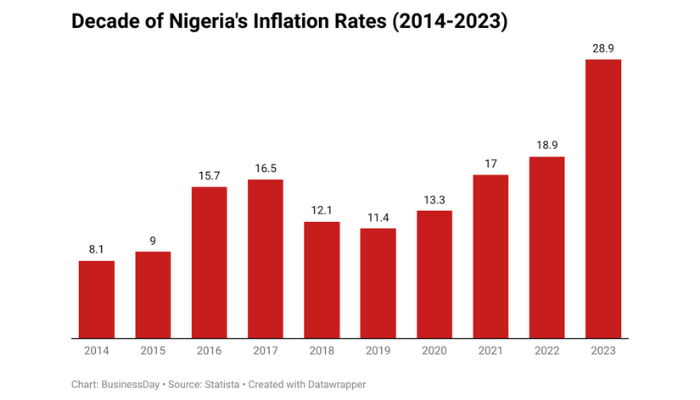
                  Over the past decade, Nigeria’s inflation rate has undergone a notable transformation, marking a significant journey from 8.05 percent in 2014 to a striking 28.92 percent by 2023. This translates to a staggering percentage increase of approximately 259.26 percent over ten years, reflecting the dynamic nature of the nation’s economic landscape and the challenges it has faced along the way.

                  In economic discourse, inflation is often portrayed as a necessary evil possessing a dual nature. It acts as a catalyst for spending and investment, breathing life into economic activity. However, when left unchecked, it spirals out of control, decimating purchasing power and destabilizing entire economies.

                  For decades, a prevailing notion has held sway in economic circles: tame inflation and welfare will naturally rebound. However, recent revelations cast doubt on this simplistic narrative, exposing the intricate dance between inflation control and socio-economic well-being.

                  The assertion that controlling inflation guarantees the restoration of welfare to its original state overlooks the intricate web of factors that influence socio-economic well-being. While inflation control is undoubtedly crucial for economic stability, its impact on welfare is subject to various contextual factors and cannot be reduced to a simple cause-and-effect relationship.

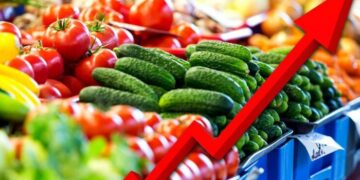
                  Recent data released by the National Bureau of Statistics (NBS) paints a stark picture of the impact of rising inflation on vulnerable communities. According to the report, both overall inflation and food inflation rates have surged, increasing by 1.5 percent and 2.18 percent, respectively. The inflation rate has spiked from 31.7 percent to 33.2 percent, while food inflation has surged from 37.92 percent to 40.1 percent.

                  These numbers highlight the harsh reality faced by marginalized populations, who bear the brunt of skyrocketing prices. High inflation rates exacerbate existing inequalities, making necessities increasingly unaffordable for those already struggling to make ends meet.

                  A notable trend has emerged: while the prices of imported food items are experiencing a downward trajectory, the cost of domestically produced food remains persistently high. This phenomenon presents a perplexing paradox within the food market landscape.

                  Regrettably, as the battle to tame inflation wages on, with the lofty goal set by Cardozo, the governor of the Central Bank of Nigeria, to cap inflation at 21.4 percent by the year 2024, a pressing question looms large: even if this ambitious target is achieved, will the welfare of the masses, particularly the vulnerable segments of Nigerian society, be restored to its former state?

                  The proclamation of curbing inflation to a specific threshold is undoubtedly a commendable objective, promising a semblance of stability in the economic landscape. However, the true measure of success lies not only in reining in inflation but also in ensuring that the benefits of such endeavors trickle down to the most marginalized members of society.

                  As policymakers navigate the intricacies of monetary policy, it is imperative to recognize that economic indicators alone do not encapsulate the full spectrum of human welfare. Beyond statistics and thresholds lie the lived experiences of millions of Nigerians grappling with the harsh realities of soaring prices and dwindling purchasing power.

                  Therefore, while the quest to tame inflation is a crucial step towards economic stability, it must be complemented by targeted interventions that address the root causes of socio-economic disparities. Only then can we hope to witness the restoration of welfare to its initial conditions, ensuring a brighter and more equitable future for all Nigerians? Nigeria’s Gini coefficient, a measure of income distribution within a population, has undergone significant fluctuations over the past decade. Starting at a high of 48 in 2014 and ending at 38.37 in 2023, according to BusinessDay projections, these numbers paint a vivid picture of the country’s socio-economic landscape. The Gini coefficient provides insight into the degree of inequality within a society, with higher values indicating greater disparities in income distribution.

                  Nigeria’s economy is a captivating tale of complexity, where the undeniable influence of human factors shapes its unique trajectory. At the heart of this narrative lies a concept as intriguing as it is perplexing: the “Cobweb Theory.”

                  This theory, akin to a spider’s intricate web, suggests that the prices of agricultural output in Nigeria exhibit a pattern where increases never quite return to their original position. It is a phenomenon that has unfolded over time, painting a poignant picture of the Nigerian economic landscape.

                  Indeed, the stark reality is that even when the economy stabilizes, essential commodity prices stubbornly cling to elevated levels, refusing to revert to their initial state. It is a situation that evokes a sense of pathos, underscoring the enduring challenges faced by ordinary Nigerians as they navigate the complexities of daily life.

                  This narrative serves as a powerful reminder of the resilience and adaptability required to thrive in Nigeria’s economic environment. Ordinary Nigerians confront myriad challenges daily, each hurdle a testament to their unwavering determination and strength.

                  It’s a reality that evokes a profound sense of empathy and compassion, recognizing the inherent struggles faced by individuals striving to carve out a better life for themselves and their families.

                  Yet, amidst the adversity, there is a glimmer of hope—a testament to the indomitable spirit of the Nigerian people. It is within the depths of these challenges that seeds of resilience are sown, paving the way for transformative growth and progress.

                  Alawode Gbenga, an information economist, underscores the critical importance of the Monetary Authority’s role in ensuring that inflation rates remain within manageable thresholds. His insights shed light on a pressing concern: the far-reaching socio-economic implications of allowing inflation to spiral out of control.

                  Gbenga highlights the plight of vulnerable Nigerians, emphasizing that mere inflation control measures are insufficient to shield them from the adverse effects of economic instability.

                  In his poignant assessment, Gbenga humanizes the issue, drawing attention to the real-life impact on individuals and families struggling to make ends meet. He articulates a heartfelt plea for action, urging policymakers to recognize the human face behind the statistics and take decisive measures to safeguard the welfare of the most vulnerable members of society.

                  Gbenga’s impassioned plea serves as a poignant reminder of the profound responsibility borne by the Monetary Authority and policymakers alike. It is a call to action, echoing the voices of ordinary Nigerians whose livelihoods hang in the balance. In the face of economic uncertainty, Gbenga’s words resonate as a rallying cry for compassion, empathy, and decisive action to protect the most vulnerable among us.

                  The Gini coefficient, a measure of income distribution, serves as a lens through which to view the fairness of wealth allocation within the population. As the years unfold, we witness fluctuations in this metric, ranging from a high of 48 in 2014 to a projection of 38.37 for 2023, according to BusinessDay. This journey reflects shifts in societal dynamics, with higher values indicating greater disparities in income distribution.

                  Simultaneously, the inflation rate, representing the rate at which prices rise over time, showcases the ebb and flow of economic stability. Nigeria grappled with inflationary pressures throughout the decade, with rates fluctuating from single digits to double digits. The year 2023 saw a notable spike in inflation, reaching 28.92 percent, underscoring the challenges faced by businesses and consumers alike.

                  Against this backdrop, the intersection of the Gini coefficient and the inflation rate reveals profound insights into Nigeria’s economic landscape. The correlation between income inequality and rising prices highlights the interconnectedness of socioeconomic factors, emphasizing the need for holistic policy approaches to address systemic issues.

                  As Nigeria navigates the complexities of its economic journey, one thing remains abundantly clear: simplistic narratives no longer suffice. Debunking myths surrounding inflation and welfare reveals a stark reality: the need for comprehensive, targeted interventions to address the root causes of socioeconomic disparities.

                  From the soaring inflation rates to the fluctuating Gini coefficient, the challenges are multifaceted. Yet, amidst the complexity, lies an opportunity for transformative change. Only through concerted efforts can Nigeria pave the way for a brighter, more equitable future for all its citizens.

                  Previous Post

                  Dangote refinery ramps up production with US crude – Report

                  Next Post

                  Naira tumbles to N1,234/$ at official market, speculators resume hoarding

                  Admin

                  Admin

                  Next Post
                  Worries as Naira slumps further to N1,100/$ in unofficial market

                  Naira tumbles to N1,234/$ at official market, speculators resume hoarding

                  Opinion Poll

                  2023 Insurance Industry Report2023 Insurance Industry Report2023 Insurance Industry Report
                  FSDHFSDHFSDH
                  • Trending
                  • Comments
                  • Latest
                  News of impending flood sends jitters across Ogun, Lagos communities

                  News of impending flood sends jitters across Ogun, Lagos communities

                  August 22, 2020
                  Why Nigeria should end fuel subsidy – Akabueze

                  Why Nigeria should end fuel subsidy – Akabueze

                  September 8, 2022
                  Malami Tells IOCs to Pay $62.1bn PSC Arrears

                  In Landmark Agreement, US to Return $308m Abacha Assets for Infrastructure

                  February 5, 2020
                  Milk import waiver: Experts differ on CBN concession to 6 firms

                  Banks’ non-performing loans now N1.2tn – CBN

                  July 28, 2020
                  Banking Sector Strengthens as Capital Adequacy Ratio Hits 15.2%, Liquidity 49.06%

                  Amid 27.50% MPR, Economic Challenges, Prime Lending Rate Rise to 18.19%

                  August 11, 2025
                  FG fines Multichoice N766m over privacy breaches

                  FG fines Multichoice N766m over privacy breaches

                  July 7, 2025
                  Despite Economic Downturn, Nigeria’s Non-pension AuM Up 71% to N10.1trn

                  Despite Economic Downturn, Nigeria’s Non-pension AuM Up 71% to N10.1trn

                  July 2, 2025
                  Food inflation: NSA, 36 states launch joint action

                  Food inflation: NSA, 36 states launch joint action

                  June 20, 2025

                  Recent News

                  Banking Sector Strengthens as Capital Adequacy Ratio Hits 15.2%, Liquidity 49.06%

                  Amid 27.50% MPR, Economic Challenges, Prime Lending Rate Rise to 18.19%

                  August 11, 2025
                  FG fines Multichoice N766m over privacy breaches

                  FG fines Multichoice N766m over privacy breaches

                  July 7, 2025
                  Despite Economic Downturn, Nigeria’s Non-pension AuM Up 71% to N10.1trn

                  Despite Economic Downturn, Nigeria’s Non-pension AuM Up 71% to N10.1trn

                  July 2, 2025
                  Food inflation: NSA, 36 states launch joint action

                  Food inflation: NSA, 36 states launch joint action

                  June 20, 2025
                  Thebizhub

                  Powered by Agusto & Co.

                  • About
                  • Advertise
                  • Privacy & Policy
                  • Contact

                  ©2019 Thebizhub.ng .All Rights Reserved

                  No Result
                  View All Result
                  • Home
                  • Economy
                  • Sports
                  • Markets
                  • Regulations

                  ©2019 Thebizhub.ng .All Rights Reserved