







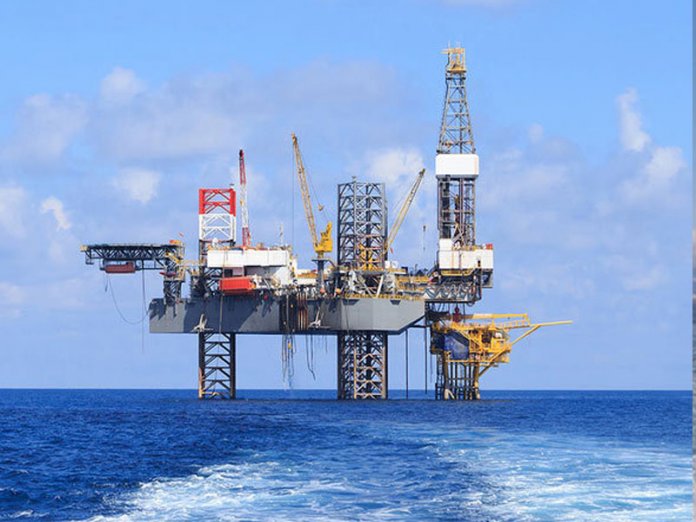
Nigerian National Petroleum Corporation (NNPC), and stakeholders in the upstream sector have expressed concerns over the impact of the Covid-19 on oil and gas exploration and production in the country, as major oil companies continue to reduce investment in the sub-sector.

Recall that amid low crude oil price, the future of thousands of upstream projects estimated at about $160billion in Nigeria alone has remained uncertain, as companies struggle to stay afloat.
Speaking at a webinar organised by Energy & Corporate Africa, Bariwei, who stressed the need for collaboration and capacity building, noted that the upstream sector must become creative to survive the prevailing situation.
“Upstream operators must evaluate the value of their assets and define which activities to focus on, which development opportunities to pursue, and where to invest,” he said.
Speaking further at the conference, themed, “The Future of Upstream in Nigeria – Post-COVID-19,” Bariwei said the sector should reconfigure not only based on potential supply-demand scenarios, but also on stakeholders, such as governments, regulators, and investors.
Besides, he argued that cutting capital spending, seeking efficient ways to be profitable, and a limited level of exploration investment, may persist.
According to him, operation efficiency and cost optimisation remains the key and can be achieved through transformation across all the domains.
He also urged proper data usage to enable the sector to achieve operational excellence, stressing that digital and other evolving technologies if properly-deployed would buoy survival.
He called for process reengineering, adoption of scalable technology to enhance traditional processes as well as the adoption of technology to aid collaboration for shared asset understanding, and process transparency, auditability, and repeatability.
Bariwei stressed the need for advanced drilling monitoring and analysis solutions to ensure real-time data aggregation and monitoring, automated interpretation and performance, efficiency analysis, cross-domain collaboration, and a process that would capture store analyse and report the data.
More reliable forecasts in reservoir simulation would also be needed, especially with high-resolution geology, robust field development complex recovery process, detailed well modeling, faster run time and domain integrated toolbox, he added.
He disclosed that most oil blocks in the Niger Delta have been covered by conventional seismic exploration, adding that unconventional terrains like urban areas, swampy zone, TZ, and shallow water needed further survey.
He said the exploration could be better and more precise, adding that non-conventional technologies would become very vital in the unconventional terrains.
Also speaking at the online conference, Executive Director, Seplat Petroleum Plc, Iffy Okon, said Nigeria’s huge oil resources, growing population, and energy deficit presented a great opportunity for investment.
He insisted that Nigeria’s upstream sector is competitive when compared to other countries, adding that fiscal regulatory lapses persist, compounded by security and infrastructure loopholes, funding gap, uncompetitive production cost, gas sector challenges, and bureaucratic processes.
He said the oil and gas sector has lost competitiveness over the years compared with other industries, as countries like Nigeria failed to take advantage of the strong demand in the past few years.
Okon urged Nigeria to take advantage of gas resources, stressing that Nigeria could capture a sizeable fragment of the global market for petrochemical and fertilizer.