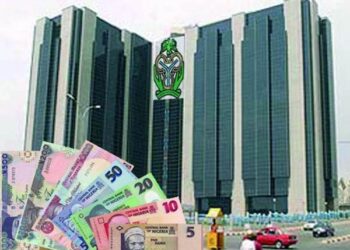








President Muhammadu Buhari had last October laid a proposed budget (Appropriation Bill) of N10.33trn before a joint session of the National Assembly and three months after, the Legislature jacked up the proposal with about N263.946 billion and by December 6, passed NIO.59 trillion as aggregate expenditure for the fiscal year.
The revenue and expenditure budgets are N8.15 trillion and N10.33 trillion, respectively, resulting in N2.18 trillion fiscal deficit. A further analysis of the approved budget indicates that current expenditure got N4.84trn, while N2.4trn was provided as capital budget for the year. Debt servicing got N2.72trn allocation compared to statutory transfers’ provision of N560.4bn. Overall, the Legislators projected that N2.28 trillion would be the budget deficit and that the deficit to Gross Domestic Product (GDP) ratio will stand at 1.52 percent for the fiscal year. Other key assumptions of the budget include 2.18 million barrels of crude oil per day will be produced at $57 dollars per barrel; the average exchange rate of N305/$; and GDP rate of 2.93 percent.
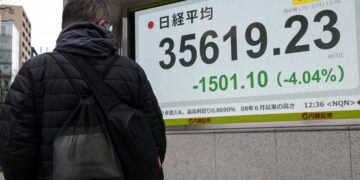
With the threat of the Coronavirus being felt across the global geo-political and economic frontiers with increasing intensity as the days roll by over the past two months, the Nigerian economy in particular and several others generally are experiencing the shocks in a way that may rubbish previous assumptions on which revenue earnings and GDP forecasts are anchored.
For instance, as an oil exporting country, Nigeria’s revenue projections from crude exports have dipped as oil prices have hovered between $51 per barrel and $53 per barrel in the past two weeks. Even if calculated at 2 million barrels per day output, this means that the country’s revenue shortfall from crude exports stands at least $102 million (about N31.110bn) daily.
While the crude oil earnings can be calculated based on the crude oil production and benchmark oil price assumptions of the budget, the non-oil earnings in form of non-oil tax revenues are so complex that calculating the impact of the Coronavirus on the projected earnings will be out rightly absurd. The government projected non-oil tax revenues of N1.81 trillion and other revenues of N3.7 trillion in the budget.
Even before the China ‘born’ Coronavirus swept through the global landscape with ravaging impact a few weeks ago, the international oil market had become terribly volatile as Russia and the US engaged in a market supply war that crashed oil prices and compelled the Organisation of Petroleum Exporting Countries (OPEC) to adopt the supply cut strategy to keep crashing oil prices at bay.
Analysing the implications of the virus for the nation’s economy, particularly for the projected GDP growth rate and real sector performance, a researcher and economist, Dr. Adeniran Adedeji, noted that the rampaging Coronavirus has already hit economic heavyweights like China, Italy and the USA with huge economic cost to the countries, especially their growth potential in the 2020 fiscal year. The expert, who is a research analyst at the Centre for the Study of Economies of Africa (CSEA), pointed out that while only a case has been identified so far in Nigeria, the virus will have an enormous economic impact on the economy, with the most direct impact on Nigeria linked to the oil sector as oil price is now below the $57 benchmark set in the 2020 appropriation budget and oil demand also declining in the face of weak global economic activities.
He said: “The implication is lower revenue, which will further shrink an already tight fiscal space. This might lead to an economic slowdown, as budget implementation becomes a major issue. The productive sectors of the Nigerian economy will also be affected in other ways. Coronavirus is affecting the global supply chain, thereby limiting access to some final and intermediate goods. “This could affect the service sector in Nigeria that relies on importation from China.
The manufacturing sector might also be unable to access vital inputs due to the disruption of the global supply chain. Lastly, business uncertainty and risks have grown with Coronavirus and this will significantly reduce investment inflow into the country,” Adedeji predicted.
Commenting on the virus’ impact on the economy, the Lagos Chamber of Commerce and Industry, noted that with crude oil price falling to all time low of $45.27 per barrel last Friday against the oil price benchmark for 2020 budget at $57 per barrel, the sharp drop in revenue could cause significant dislocations in the 2020 budget and in the economy, especially for a country already grappling with challenges of weak revenue performance and a complete erosion of fiscal buffers.
The Director General of the OPS group, Mr. Muda Yusuf, in a statement that represents the position of the chamber on the virus’ scourge, maintained that the Coronavirus portended serious danger to government’s revenue projections, 2020 capital budget performance and the nation’s foreign reserves. He clarified: “There is also the revenue effect of the Coronavirus which is related to the drop in oil price.
Oil revenue currently accounts for about 50% of government revenue and about 85% of foreign exchange earnings. With the current scenario of tumbling oil price, a drastic reduction in the revenue of government may become inevitable in the near time. “This has implications for the level of fiscal deficit in the budget; budget implementation will be constrained; infrastructure financing will be affected; borrowing may increase, and the capacity to fund capital project will be severely constricted.
With this scenario, the outlook for oil dependent economies looks rather gloomy”, the economic analyst added. Commenting, a chartered tax practitioner and university don, Prof. Teju Somorin, agreed that the Coronavirus virus portends serious risks to performance of the 2020 budget, pointing out however that the implications of the scourge are not peculiar to Nigeria but are for the global economic system generally. Somorin, a former President of the Chartered Institute of Taxation of Nigerian and currently Dean, Faculty of Post Graduate Studies, Caleb University, Lagos, said: “Obviously, its effect is negative on not only on the 2020 Budget but on the global economy.
There have been restrictions on people’s movement due to the virus.” In his comments, a financial inclusion expert and SME promoter, Alhaji Tajudeen Kareem, aligned his views with other experts’ position on the negative impact of the virus on the economy now and the high prospects that this may get worsened if the menace posed to healthy living is not addressed as soon as possible. For instance, he pointed out that since oil quotas for petroleum exporting countries are subject to review by OPEC in the face of market disruptions as being witnessed following the coronavirus outbreak a few weeks ago, this implies a downward volume of sales and lower revenue for Nigeria.
Specifically, the analyst, who is the National Coordinator of the Basic Registry and Information System in Nigeria (BRISIN), said that lower sale of crude oil and lower revenue from the source portends a negative impact on Budget 2020, as the ugly development in the international oil market is expected to distort plans and projections for the financial year.
Kareem said: “Investment portfolios will be affected because fewer investors are coming to Nigeria. This is already manifesting in the disruption of the completion schedule for the Lagos-Ibadan railway by the Chinese. “Tourism will also be affected, possibly the film, music and soccer business may be negatively impacted if visitors, artistes and sportsmen are unable to travel”, the BRISIN chief added. As researchers, medical experts, international agencies like the World Health Organisation (WHO) and national governments across the world continue their collaborative efforts to deal with the scourge, analysts believe that the Nigerian government can only mitigate its negative impact on the economy by only one means – fiscal prudence in the public finance system.