

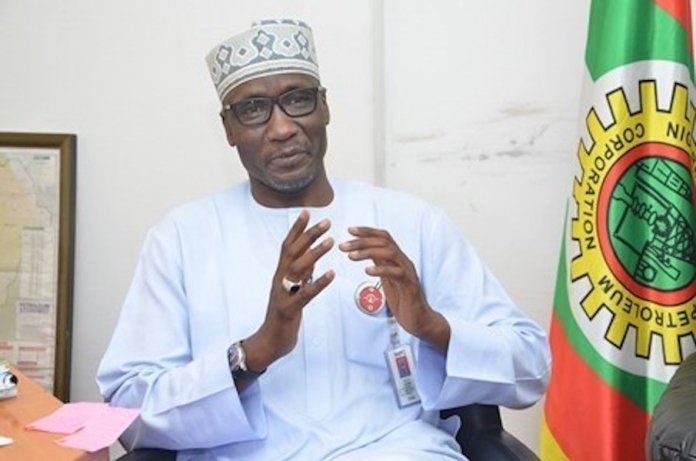
The Group Managing Director of the NNPC, Mallam Mele Kyari, last week revealed that the corporation will spend money to repair its four broken-down refineries in Warri, Port Harcourt and Kaduna, after which it would hand them over to select Operation and Maintenance (O&M) experts to operate for it.

“We are going to get an O&M contract, NNPC won’t run it. We are going to get a firm that will guarantee that this plant would run for some time. We want to try a different model of getting this refinery to run. And we are going to apply this process for the running of the other two refineries,” Kyari said in a television interview. According to him, the ultimate plan would be to enlist private partners who would invest in the refineries and get them to run on the business model currently used by the Nigeria Liquefied Natural Gas (NLNG) Limited.
The NLNG is an incorporated limited liability company operated as a joint venture between four shareholders comprising the federal government which has 49 per cent of its shares, Shell – 25.6 per cent, Total Gaz Electricite Holdings France – 15 per cent and Eni – 10.4 per cent.
With the proposed model, Kyari inferred that the prospective shareholders of the refineries would thus be free to decide how the refineries operate. He also noted that the model being different from those previously adopted by the corporation will guarantee recovery of the refineries’ efficiencies.
But revamping and handing over the refineries to select O&M experts as disclosed by Kyari isn’t the first time the corporation would be making such plan. In fact, in most of the first term of President Muhammadu Buhari, the corporation and former Minister of State for Petroleum Resources, Dr. Ibe Kachikwu, also made such pronouncements and failed with various options except privatisation or liberalisation to revamp the refineries.
The inefficiency of the refineries has resulted in Nigeria importing most of the petroleum products it uses to run her domestic economy, an unpleasant development that pushed Kachikwu to offer to resign his ministerial portfolio by May 2019 if Nigeria continued to import petrol.
NNPC also made effort to get private investors to fund the repair of the refineries on terms that would have been beneficial to both parties, but the arrangement collapsed eventually when they could not agree on terms.