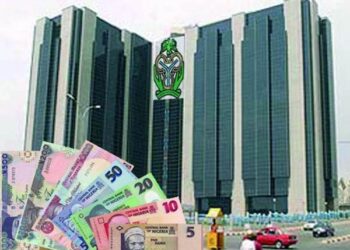








The Central Bank of Nigeria (CBN) has clarified that it has not stopped Deposit Money Banks (DMBs) from accepting cash deposits into and withdrawals from domiciliary accounts.
The CBN had recently in a circular stated that those who deposited cash into their foreign currency accounts (domiciliary accounts) will now have to withdraw the cash as they were not going to be allowed to transfer the funds electronically.
The apex bank stated in the circular signed by Olakanmi Gbadamosi, Director of Trade and Exchange, that, “For foreign currency cash lodgments made prior to the date of this circular, the account holder has the option to either withdraw his or her foreign currency cash or the naira equivalent. “The CBN advises individuals that wish to source foreign currency for eligible and legitimate purposes such as BTA, PTA medical, mortgage, school fees and goods to do so through recognised channels with the use of Form “A” for “invisible” and Form “M” for “visible” transactions.”
However, a section of the media had reported that CBN’s recent restrictions on domiciliary accounts mean no more cash deposits into the accounts. Our correspondent visited some banks to verify the authenticity or otherwise of the media reports. Daily Trust findings at First Bank’s main branch located in the Central Business District (CBD), Abuja, showed that many customers were withdrawing and depositing cash into their domiciliary accounts without hitches. Checks at the Zenith Bank, Maitama branch, reflected the same scenario.
Confirming our findings, the Director, Corporate Communication of CBN, Mr. Issac Okorafor, said “the apex bank has not prohibited the acceptance of foreign currency cash deposits by DMBs.” He further explained that “only electronic fund transfers into domiciliary accounts can be also be transferred from such accounts while cash deposits into such accounts can only be withdrawn in cash also.” Okorafor, therefore, urged stakeholders and other interested parties to always endeavour to seek clarification on issues and avoid speculative tendencies which were detrimental to the financial system.